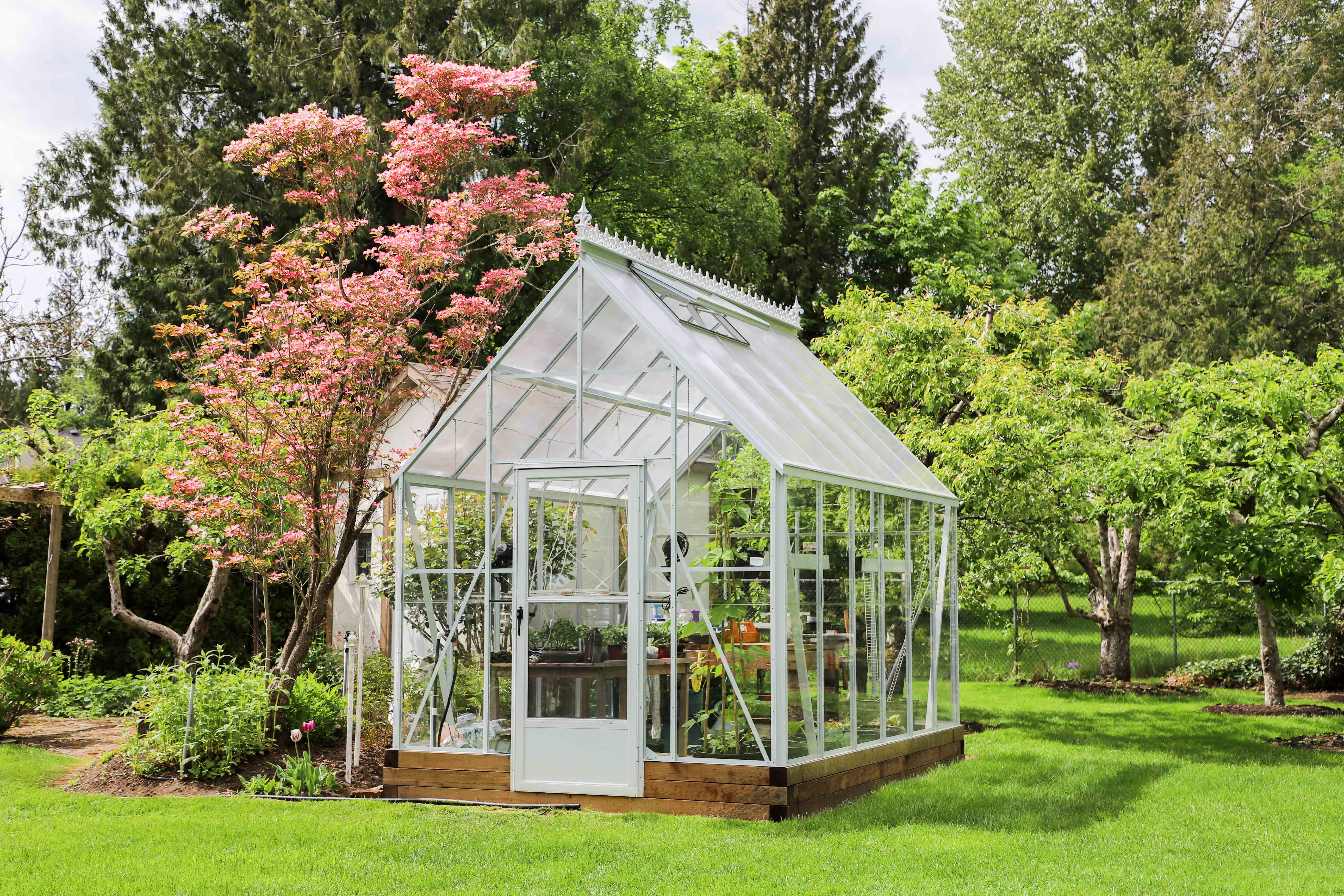
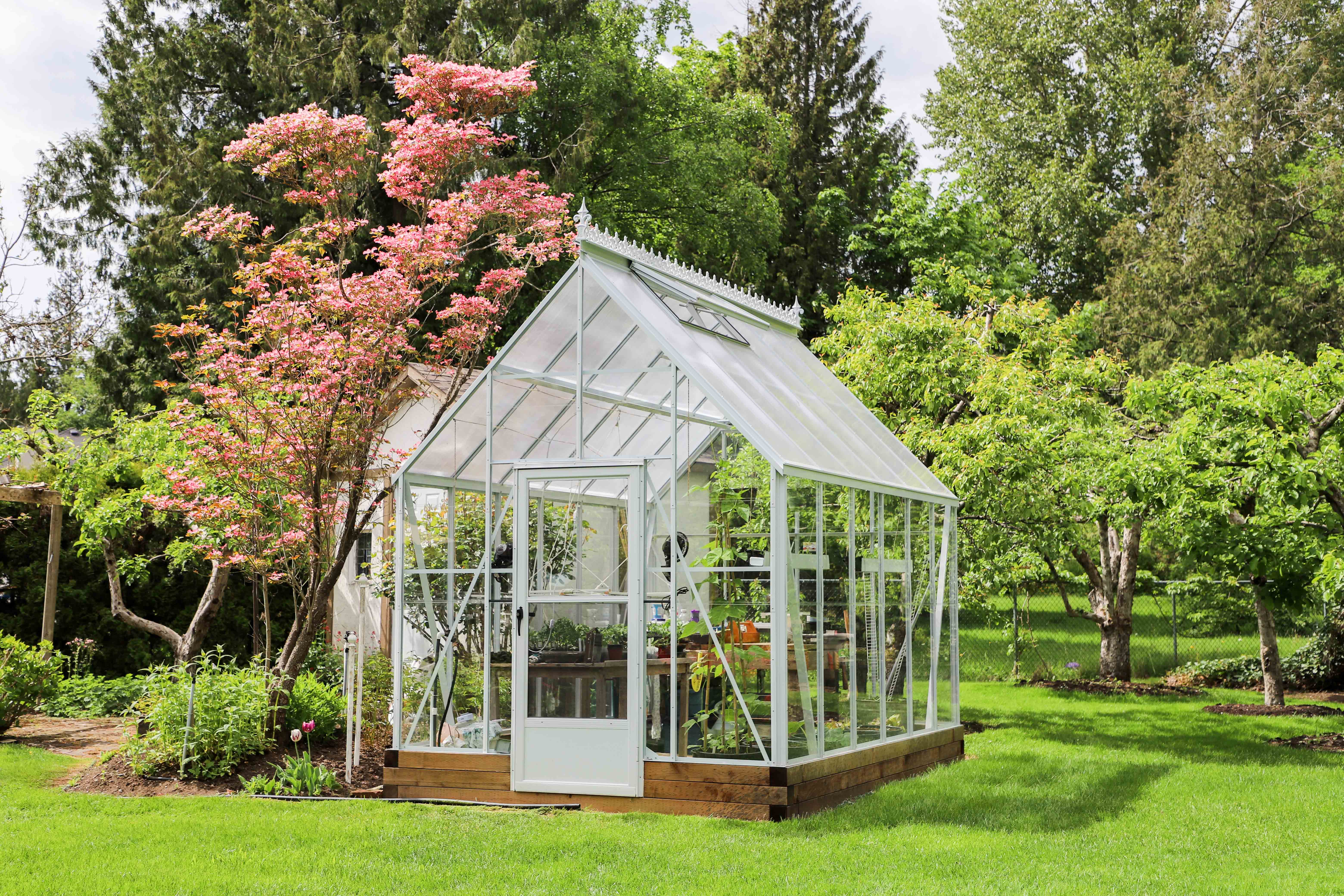
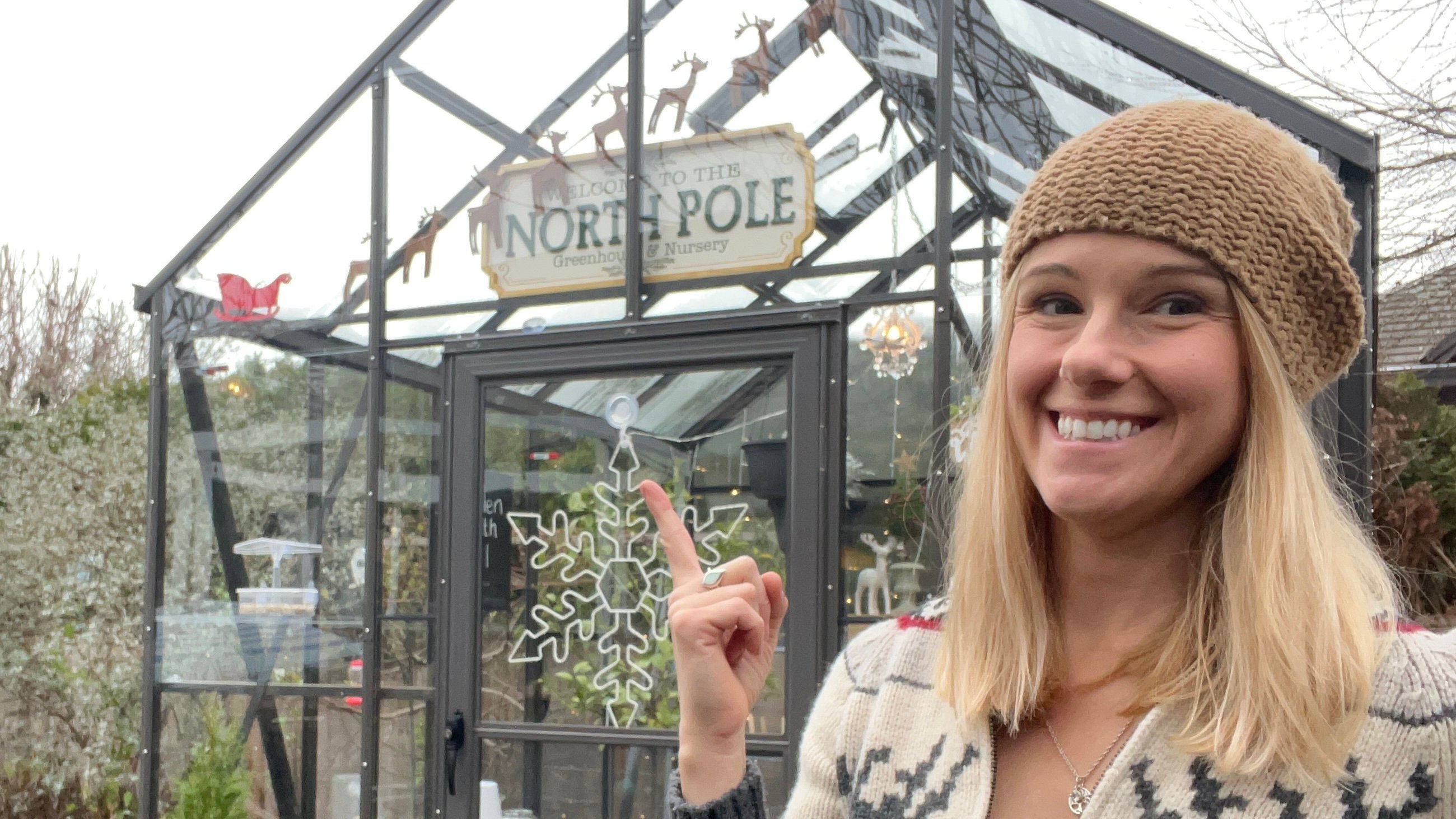
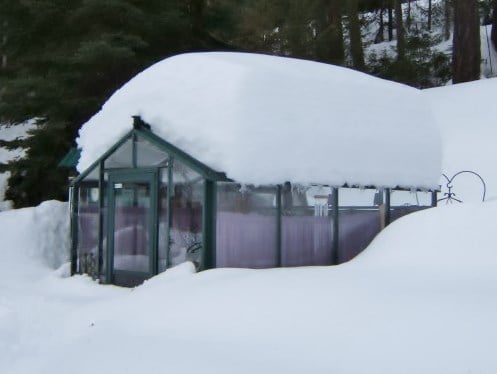
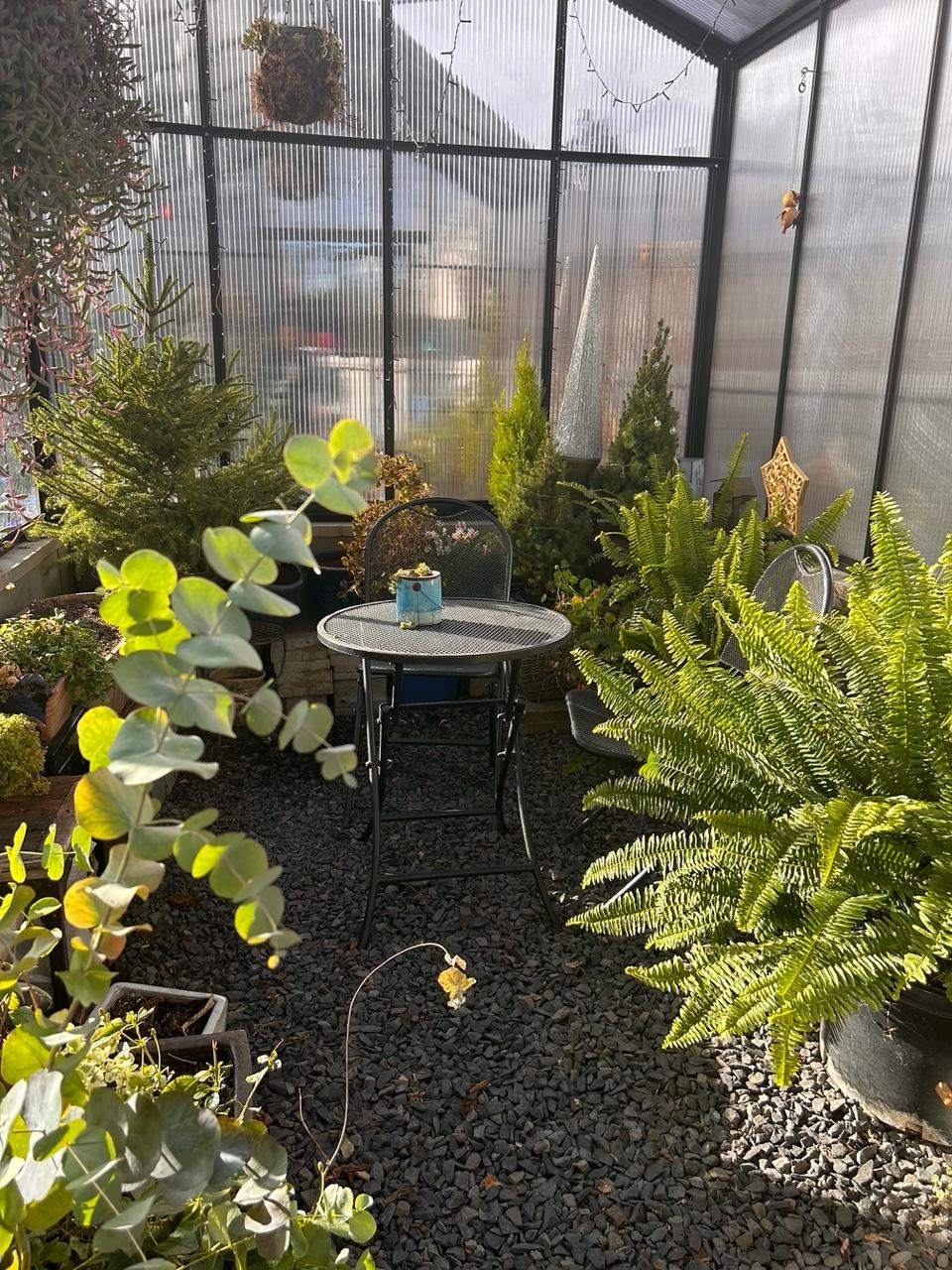
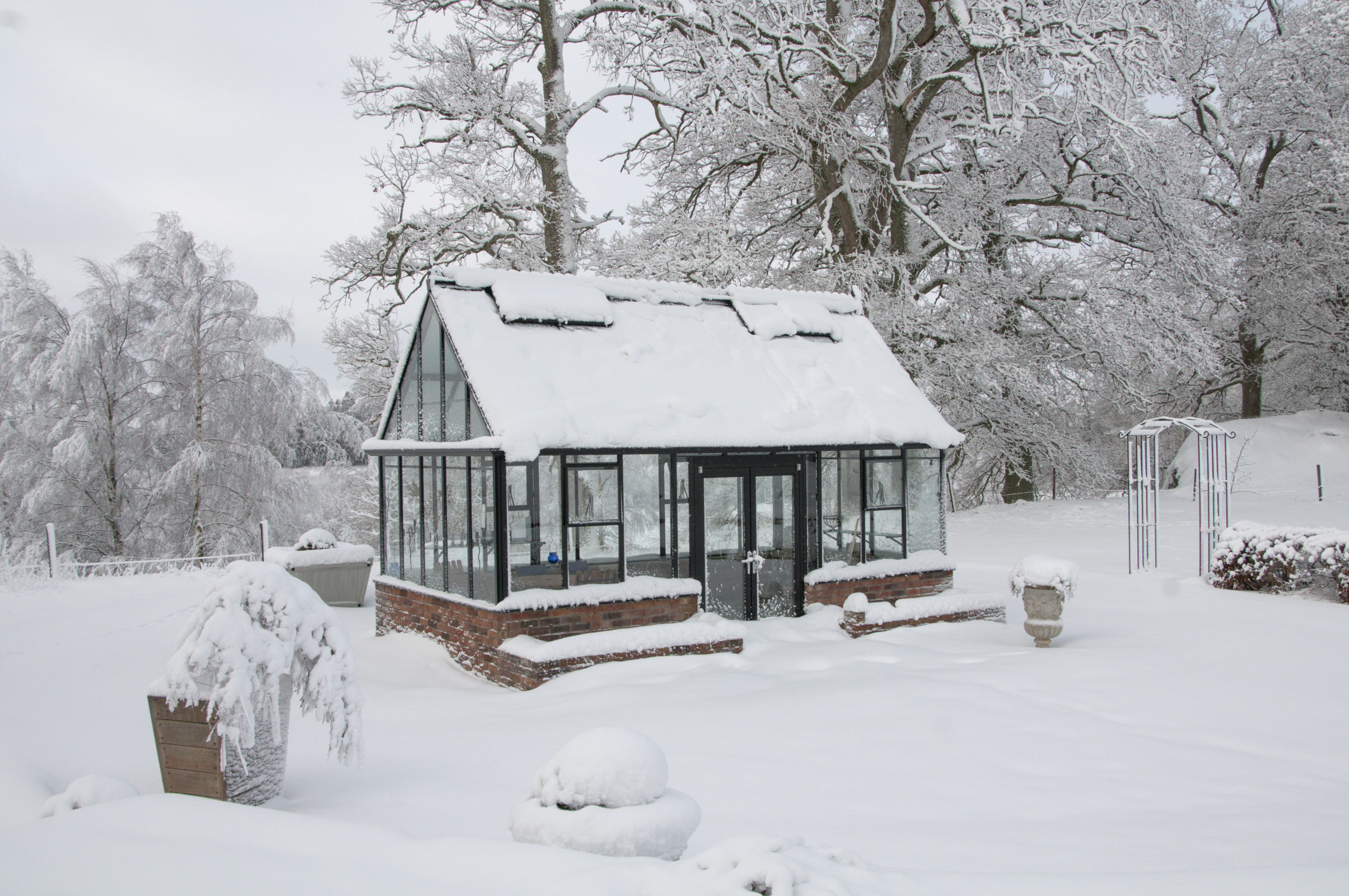
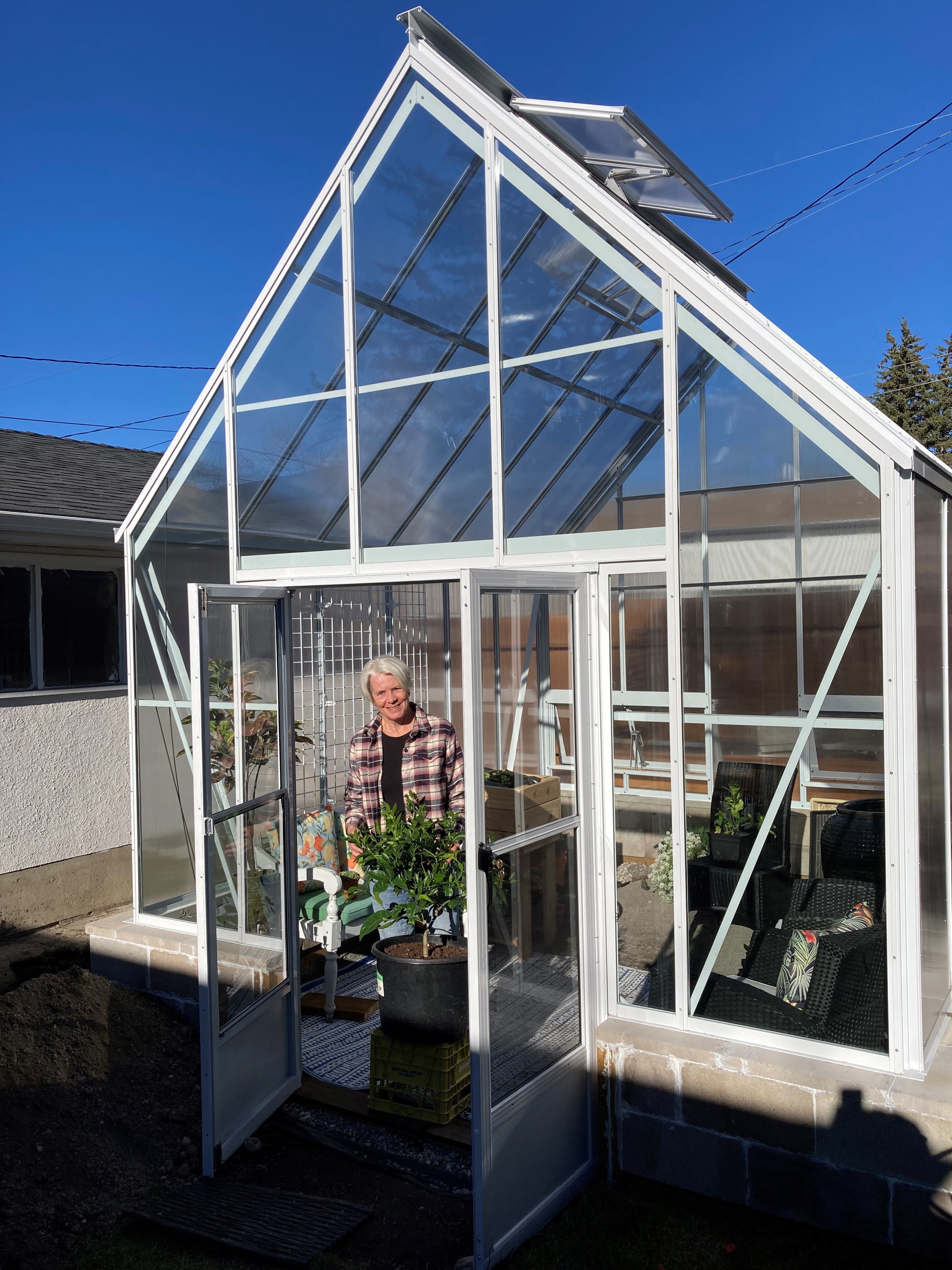
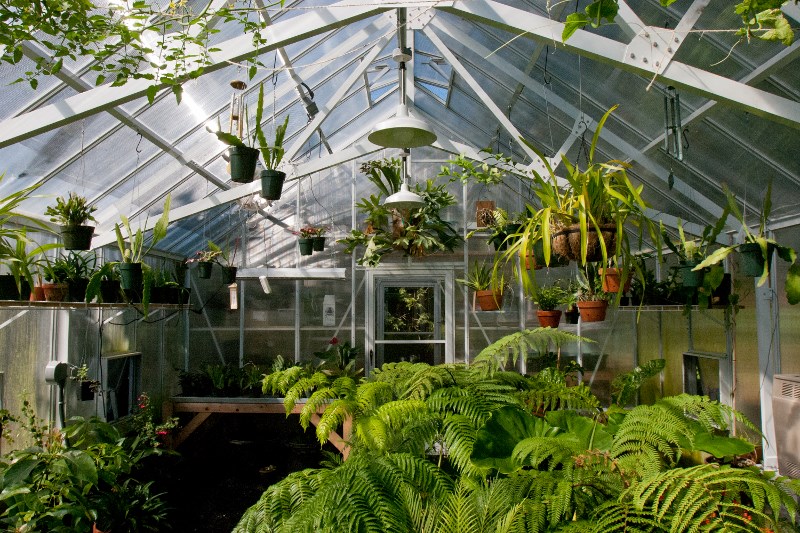
BC Greenhouse Builders Featured on Houzz.com!!

Posted in Uncategorized | 1 Comment

Building a Foundation for your Greenhouse

Greenhouse Foundations

Pressure Treated Wood Foundation:

A hobby greenhouse under (100 sq. ft.) can be fastened to a 4″ x 4″ or 4″ x 6″ treated wood timber foundation. For a larger greenhouse a 6″ x 6″ beam is recommended. Pressure treated wood now requires a 10 mm polyethylene barrier between wood and aluminum sill to prevent corrosions of aluminum.  Wood timbers can be stacked to increase the height of the greenhouse.  BC Greenhouse Builders offers a free door drop to your greenhouse to give it a more permanent look.  We would recommend that the treated timbers be placed on a perimeter of gravel or a bed of gravel to allow for proper drainage.  This often results in a useable life of the wood foundation of 20 years.

Concrete Foundation:

A footing is a shallow foundation that is generally embedded into the soil.  It extends just below the frost line to prevent shifting or heaving.

A slab is another common type of shallow foundation common with greenhouse structures.  The weight of the building is transferred to the soil through the concrete slab placed at the surface.  The slab will primarily be 4 – 6 inches in thickness, except at the perimeter where it will be thickened.

All concrete foundations should include the use of rebar to strengthen the concrete and steel mesh in the slab options.

The concrete must cure for a week and be level and square for easy installation.  Bevelled edges, decorative notches or uneven surfaces will require major modification to the greenhouse and foundation itself.

Bricks or Cinder Blocks:

Bricks or masonry blocks may also be used, but ensure the top bricks are closed off, so it has a flat surface to fasten the greenhouse to.  These blocks should be filled with concrete and mortared together to ensure it is structurally sound.  The bricks and cinder blocks should have a hard, level surface to avoid settling and cracking.  Bricks and cinder blocks can increase the thermal mass of the structure but do inevitably degrade over time.   Generally speaking, there is an increased chance of condensation with this type of foundation.

Here are some questions to consider when choosing a type of foundation.

Do you require a permit in your municipality?

A permit is generally required if the structure is meant to be permanent or more than 100 square feet.  The guidelines around permits vary according to municipality.

Will you require engineered drawings?

BC Greenhouse Builders is one of the few greenhouse manufacturers that can provide sealed engineered drawings that will be required in most cases where a permit is necessary.

Where is your water access and do you want to incorporate a sink?

If it fits within your budget, a sink is very handy in the greenhouse.  Clean up and sterilizing garden tools is much easier!  Many gardeners like to incorporate misting systems as well as thermal heat syncs which require easy access to water.

What are your power requirements?  Can your electrical panel handle the extra load of the greenhouse?

If you wish to heat your greenhouse with an electric heater, you may need to incorporate a sub panel with 220 volt.  Depending on your climate, a 4KW heater would require more voltage than a typical 115 volt outlet, and with the addition of fan system, most large greenhouse gardeners will need additional power to the greenhouse.

Is your yard level?  How do you access your site?

Sloped yards require more concrete and take more time to build.  Your yard access may be an important point should you require any specialty equipment.

How far down to go?

If you require a permit, your city by-laws may stipulate that you need to set the greenhouse foundation beneath the frost line depending on the properties of your soil, you may require a mini excavator to dig to the necessary depth.  Often foundations can incorporate concrete pier blocks (same as what is under deck posts) or sona tubes to be the portion that extends down to the frost line

What do you need for drainage?  Where is your perimeter drain?

Most contractors will suggest installing a drain into your concrete floor with a bit of a slope to the drain for easy run off.  This is a very simple way to clean your greenhouse when necessary.

Price Consideration for a Foundation: 

Concrete foundations can be a wide range based on labor and material costs.  Quotes should be based on site inspection as certain conditions can greatly affect cost such as slope, ground quality, presence of moisture, rocks, etc.

Posted in custom greenhouses, Greenhouse Gardening Tips, greenhouse sale, hobby greenhouse kits | Tagged , , , , , , , , , , , , , , , , , | 2 Comments

Learning Tools for New Greenhouse Gardeners!

Have you ever wondered how other gardeners stage their greenhouse?  Apply passive heating?  Build a soil heating table?  In addition to our Facebook page and our blog, there are also many gardening forums out there too!

Here are a few of the most popular:

Dave’s Garden – The forum landing page is user-friendly and breaking down topics ranging from caring for different types of plants to seed exchanges.

I Can Garden – Although this forum is a new feature for this website, there are thousands of articles on gardening subjects and a great search box to place your inquiry.

Helpful Gardener – This is the easiest to navigate of the three and has some unique information on bonsai trees and organic gardening.


Helpful Greenhouse Gardening Books

In Your Greenhouse: A Beginner’s Guide by Greta Heinen

Greenhouse Gardening Companion by Shane Smith

Gardening in Your Greenhouse by Mark Freeman

Eliot Coleman’s Winter Harvest Handbook by Eliot Coleman

Four Season Harvest: How to Harvest Fresh Organic Vegetables from Your Home Gardens All Year Long by Eliot Coleman


Greenhouse Gardening Blogs

Beginner’s Greenhouse Guide by Greta

Nitty Gritty Potager


Podcasts (Available for Free on iTunes)

The Greenhouse Gardener

Posted in custom greenhouses, Greenhouse Gardening Tips, greenhouse manufacturer, hobby greenhouse kits | Tagged , , , , , , , , , , , , , , , , , , , , , , , , , , , , , | 3 Comments

Biggest Sale of the Year Extended!

hobby greenhouse sale

Our BIG WINTER SALE was so well received we’re carrying the savings forward into 2012! Now you have more time to create the greenhouse of your dreams!

Our biggest sale of the year is now extended to January 31st 2012. We’re offering a 10% DISCOUNT ON ANY CROSS COUNTRY HOBBY GREENHOUSE over $2500. If you have received a brochure from us in the past or received a quote, call us and we will be happy to provide you with a new price that reflects the BIG WINTER SALE savings!

For those interested in our popular Sungarden or Legacy models, we are happy to pass along a 5% SAVINGS to you. If you’re looking for some inspiration, check out our gallery of greenhouses.

To learn why BCG is the best value for your money, click here.

*These savings apply to the greenhouse and crating costs only and do not apply to accessories, shipping, greenhouse customizations or tax portions (if applicable) of an order.  The discount does not apply to Garden Rooms, superior or tubular frame greenhouses or greenhouses over 20×50. All orders MUST be shipped by February 29, 2012.

Posted in Commercial Greenhouses, custom greenhouses, greenhouse manufacturer, greenhouse sale, hobby greenhouse kits | Tagged , , , , , , , , , , , , , , , , , , , , , , | 2 Comments

Electric Heater Thermostat Calibration Techniques

The electric heaters supplied by BC Greenhouse Builders come with built in thermostats.  These built in thermostats are not precision instruments but rather offer a ‘cool to hot’ temperature range.  In order to set these thermostats to your desired temperature you will need a maximum-minimum thermometer and a few colder nights.  To calibrate, at night you set the built in thermostat to a setting in the range you believe will be close to the temperature you want, knowing the range is cool (30f to 50f) to hot (70f to 80f).  In the morning you inspect the maximum-minimum thermometer to see what the coolest temperature the inside of the greenhouse was overnight.  From this reading you can fine tune your heater thermostat setting up or down to get closer to what your desired temperature is.  You repeat this step over the course of a few cold nights until the built in thermostat is maintaining the desired overnight temperature in the greenhouse.


Some things to consider with this process is that after you have your thermostat set to your desired night time temperature, moving the heater or adding or changing air circulating fans will alter the temperature reading at the maximum-minimum thermometer location so you may need to recalibrate your thermostat.


Finally, if a specific precise temperature is desired we would suggest adding an external greenhouse thermostat which would be hardwired into the power cord of the heater or the power supply for the heater.  These are precision instruments and which can be set to an exact temperature right off the start.  You should keep in mind that you may still want to use your maximum-minimum thermostat at different locations or heights in the greenhouse as there will always be different temperature zones in the greenhouse depending on factors like heater location and air circulation.

Posted in Greenhouse Gardening Tips, Heating your greenhouse | Tagged , , , , , , , , | 2 Comments

Forcing Bulbs for Gorgeous Holiday Blooms!

from Gardenwise.ca:

For those who just can’t wait for spring-flowering bulbs to show their colours, here’s how to force bulbs to bloom earlier

It was the domestically inclined Victorians who brought the gentle art of forcing bulbs to the masses. In 1832 a nursery run by the Landreth family in London offered 50 different varieties of bulbs for sale—almost all of them destined for indoor decoration.

Today, forcing—inducing spring bulbs to flower before their natural flowering time—is a three-step process. You can do this anytime—you simply need to plant the bulbs, then simulate deep winter and early spring, says the Netherlands Flower Bulb Association.

Planting bulbs:

Fill a pot with about 8 cm (3-1⁄4 in.) of soil, then nestle into the soil as many bulbs as will fit in the pot without touching each other. Cover with about 2 to 3 cm (3⁄4 to 1-1⁄4 in.) of soil to about 3 cm (1-1⁄4 in.) from the top of the pot. (The exceptions are tulips and narcissus, which like the tops of their bulbs poking out of the soil.) Water generously.

To simulate winter:

Your pots of bulbs now need several weeks of cold and dark (see chart above). Most underground garages are ideal for this chilling period, however, make sure the pots do not freeze. Check the temperature of your garage and place the pots in a cardboard box to keep the light out. Inspect the pots weekly to see if they need watering. The soil should be moist but not soggy. If soggy, the bulbs will rot.

To simulate spring:

After the bulbs have cooled for the appropriate time period, or when shoots are 2.5 to 5 cm (1 to 2 in.) tall, move the pots to a cool 10° to 13°C (50° to 55°F) location inside the house where they are not exposed to direct sunlight (a north-facing windowsill is ideal). Keep them in this location until the shoots have greened up, leaves are showing and buds begin to appear.

Once buds are visible, you can place the pots wherever you like without worrying about providing light.

Tip:

If you’ve planted your bulbs in simple plastic pots, place them inside pretty containers to show them off to best advantage.

Crocus

Planting depth from top of soil: 2.5 cm (1 in.)
Cold, dark period 2–9°C (35–48°F): 12–15 weeks
Cool, light period 10–13°C (50–55°F): 2–3 weeks

Hyacinth

Planting depth from top of soil: tops of bulbs out
Cold, dark period 2–9°C (35–48°F): 11–15 weeks
Cool, light period 10–13°C (50–55°F): 2–3 weeks

Hyacinth (pre-cooled)

Planting depth from top of soil: tops of bulbs out
Cold, dark period 2–9°C (35–48°F): 10–12 weeks
Cool, light period 10–13°C (50–55°F): 2–3 weeks

Narcissus

Planting depth from top of soil: 2.5 cm (1 in.)
Cold, dark period 2–9°C (35–48°F): 12–15 weeks
Cool, light period 10–13°C (50–55°F): 2–4 weeks

Tulips

Planting depth from top of soil: tops of bulbs out
Cold, dark period 2–9°C (35–48°F): 14–17 weeks
Cool, light period 10–13°C (50–55°F): 2–4 weeks

Scilla

Planting depth from top of soil: 2.5 cm (1 in.)
Cold, dark period 2–9°C (35–48°F): 10–12 weeks
Cool, light period 10–13°C (50–55°F): 2–4 weeks

Posted in custom greenhouses, Greenhouse Gardening Tips, greenhouse manufacturer, hobby greenhouse kits | Tagged , , , , , , , , , , , , , , , , , , , , , , , , , , , , , , , , , | Leave a comment

Where do I start? How to choose a greenhouse

We receive lots of requests for information on the steps to purchasing a greenhouse.  We will offer a series of informative posts on the things to consider when purchasing a greenhouse, the different designs and modification options, details on building a foundation and more!

Discussion # 1 – Choosing A Design


BC Greenhouse Builders carries 6 product lines within the Cross Country brand: Pacific, Traditional, Cottage, Cape Cod, and our standard 8×8 models the Sungarden and Legacy. Each line can be modified and sized to suit your needs excluding the standard models. The first decision is to select a freestanding or home attached model. Freestanding allows you to select the appropriate site to maximize sunlight exposure and aesthetic appeal. Home attached or lean-to models offer convenient access to services, good use of yard space and added insulation.


Design Flexibility Of Our Greenhouses


Painting: All our greenhouses include a wet baked enamel paint in your choice of white, Hartford Green or Rideau Brown. Custom colors such as black, tan, grey or other colors to meet your specifications are also available.

Doors:

  • Standard doors are either 26“ or 32“wide depending on green house model. Upgrading to a 36“wide door is an option for wheelchair accessibility. Double door upgrades are also available allowing for a larger opening. Custom sizes can be built. Double doors are also available. All doors swing to the exterior of the greenhouse.
  • The included door and additional doors can be accommodated in the gable ends or sidewalls.
  • Doors can swing left or right for personal preference. All doors swing to the exterior of the greenhouse.
  • The door can be dropped lower than the rest of the frame at no additional cost if the frame is raised on a foundation. This gives more height in the greenhouse.

Vents: Optional side vents, louvers, or additional roof vents can be added to any greenhouse for added passive ventilation. Exhaust fan systems can be added and are common in larger greenhouses and warmer climates.

Mix and Match: Our four various glazing systems can be interchanged with each other to suit your needs. Example: a glass greenhouse can have a polycarbonate roof. This will help heat insulation and diffuse harmful sun rays in the summer while maintaining the clear walls for visibility.

Additional Length: Don`t feel restricted in your current greenhouse. Additional length can be added at any time in the future to accommodate more plants for a growing hobby.

Custom: If you have a pre-existing foundation, restricted yard or a creative idea you`d like to bring to life, as a manufacturer, we are able to modify our greenhouses.

  • We can offer custom lengths, widths, and roof slopes.
  • Gable ends can be removed and built to anchor an existing building.
  • All our glass greenhouses come standard with tempered glass for added safety. Laminated glass is available as an option.
  • Flashing is used to help ensure proper connections to other structures.
  • We offer various glass tinting options.
  • Our greenhouses can be designed to accommodate multi-level foundations.
  • Additional bracing can be added to accommodate higher wind and snow loads.
  • Various glass options including high performance coatings, tinting and laminations are available.

Slope Diagram for Cross Country Greenhouses


For more information, visit www.bcgreenhouses.com or call 1-888-391-4433.  We are North American made and proud of it!!


Posted in Greenhouse Gardening Tips | Tagged , , , , , , , , , , , , , , , , , , | 2 Comments

BIG Winter Greenhouse Sale!

Day 14 of our BIGGEST Greenhouse Sale of the Year! For those gardeners interested in a bit bigger greenhouse, here is our feature Cape Cod 12×16 Single Glass. The greenhouse has a steep pitch offering that beautiful Victorian design. It is a great fit for those gardeners interested in growing citrus trees or palms as the extra roof height gives needed space. Our regular feature price is $8995. From now until December 15th, save $900 and buy this greenhouse for $8095. Check out our website for more details! www.bcgreenhouses.com

Cape Cod 12x16 Single Glass

Posted in custom greenhouses, greenhouse manufacturer, greenhouse sale, hobby greenhouse kits | Tagged , , , , , , , , , , , , , , , , , , , , , , , , , , , , , | 4 Comments

Preparing a New Garden Without Chemicals

from Dave’s Garden, written by Adina Dosan.

It’s a great article – click here for the link!

http://davesgarden.com/guides/articles/view/3451/

Posted in Greenhouse Gardening Tips | Tagged , , , , , , , , , , , , , , , , , , , , , , , , , , , , , | 1 Comment

The BC Greenhouse Builders Difference!

You might be wondering how BC Greenhouse Builders is different from other greenhouse brands. These greenhouses are built to last a lifetime. We offer a lifetime warranty to prove it. Our customers pass them down to family members, seriously. I have a good story for you.  Last year at a trade show, an elderly woman approached us.  She said “I’m 80 years old and I garden in my greenhouse everyday.  I have one of your greenhouses and I bought it second hand about 43 years ago.”  Now that’s a testimonial!
Here is a photo of our beginner greenhouse called the Sungarden with 4 grown men perched on top. That’s why we’re the gardener’s choice since 1951! Yahoo!!The strongest greenhouse on the market today!
Posted in custom greenhouses, Greenhouse Gardening Tips, greenhouse manufacturer, hobby greenhouse kits | Tagged , , , , , , , , , , , , , , , , , , , , , , , , , , , , , | Leave a comment