Quick Answer:
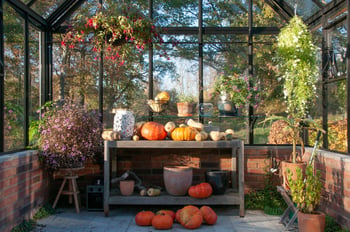
BC Greenhouse Builders recommends decorating your greenhouse around how you actually plan to use it, then layering in pieces that bring beauty and ease:
- Choose functional flooring, crushed 10mm gravel over landscape fabric, Swisstrax tiles, or a woven polyethylene rug, depending on whether drainage, color, or comfort matters most.
- Use a built-in track system and gridwall panels to organize walls year-round without permanent shelving brackets eating up space.
- Add weatherproof furniture such as real wicker, plastic "plicker" chairs, or antique wooden benches, so the greenhouse becomes a place to sit, not just a place to work.
- Switch to self-watering or sub-irrigated planters like Caja, Lechuza, Maxikap, or LifeSpace SIP Planter Beds to simplify summer plant care.
- Skip harsh overhead fluorescent lighting and use candlelight, twinkle lights, or rope lighting for evening ambience.
- Match decor to your gardening style; production-focused greenhouses look different from greenhouses designed for relaxing, reading, and entertaining.
- What Flooring Works Best for a Greenhouse?
- How Can You Organize Greenhouse Walls Without Losing Space?
- What Furniture Makes a Greenhouse Cozy and Inviting?
- Which Specialized Pots Simplify Greenhouse Plant Care?
- How Should You Light a Greenhouse for Year-Round Use?
- How Can You Personalize Your Greenhouse to Match Your Gardening Style?
My Helpful Husband (also known as Keith) installed a door sill on my new greenhouse while I was away last week. I had no idea I needed a sill, so that proves my point: I am a gardener, not a builder. I take certain things for granted.
The other thing I noticed when I got home was a huge trench snaking its way from our house to the greenhouse. "I called the electrician while you were away," Helpful Husband explained, "and he said if we dug the trench he would pop over and install power to the greenhouse."
No matter what stage you are at with your greenhouse build, you can start imagining how you will decorate the space. I don't mean door sills or power connections, although those are surely necessary. I am thinking about flooring, wall features, furniture, and specialized pots to enhance the layout. The other, more practical things can be sorted out by your builder. When I think about decorating a greenhouse, I think about the fun stuff that makes the space uniquely yours.
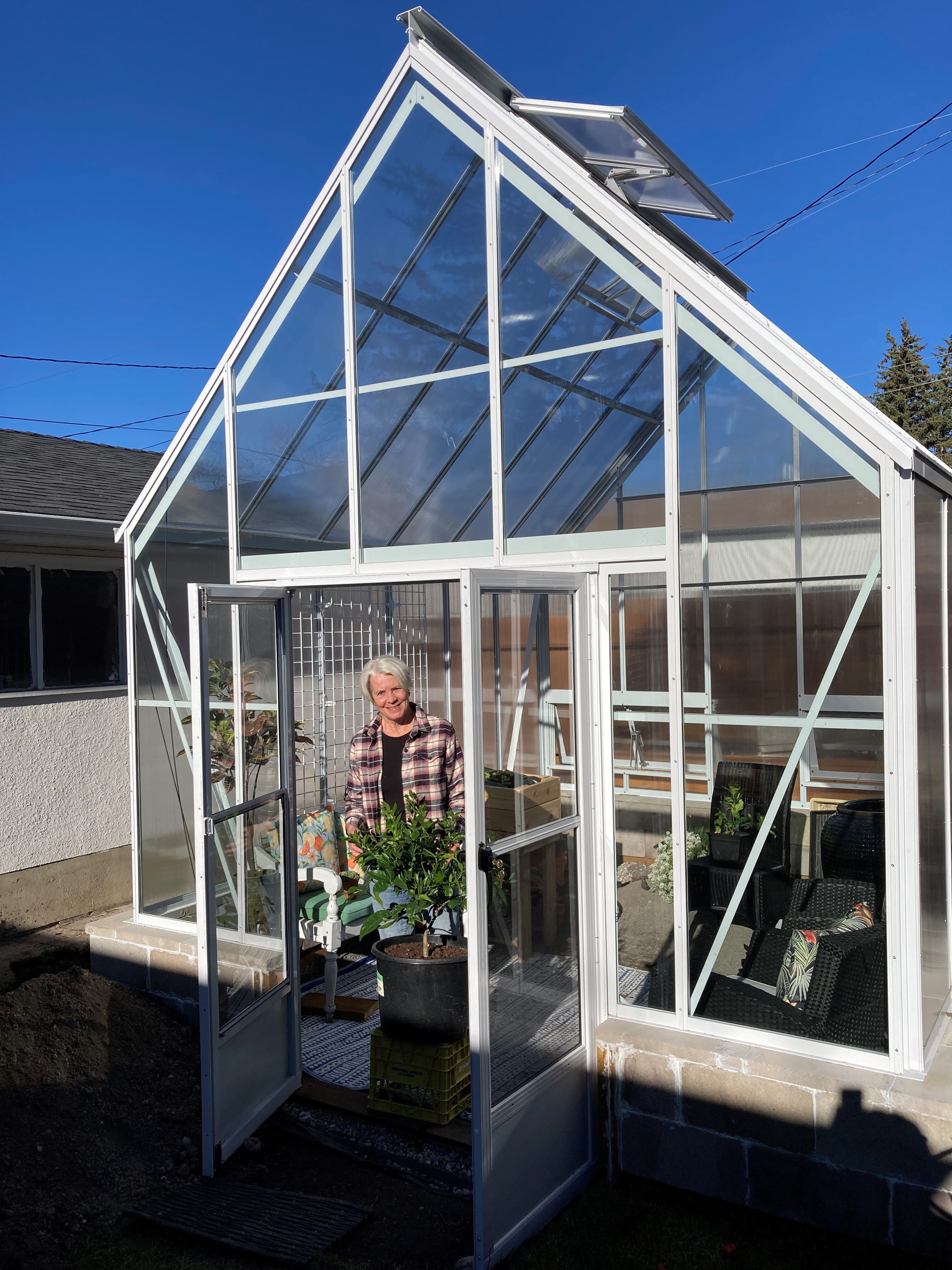
My new greenhouse is smaller than my last one, but the purpose is different. This time it is (mostly) about beauty.
Luckily for me, I have a buddy, friend, and husband who thinks about the practical things so I can focus on the creative.
What Flooring Works Best for a Greenhouse?
The best greenhouse flooring drains fast, resists weeds, and supports the furniture or planters you plan to set on it. BC Greenhouse Builders customers most often choose between gravel, modular tiles like Swisstrax, and woven polyethylene rugs, and the right pick depends on whether the space is mostly for production or mostly for relaxing.
My first greenhouse had a coarse gravel floor. It was my decision not to make a decision, and it was fine. My second greenhouse had a dirt floor because I wanted to gradually fill the space with built-in planter beds and didn't want to remove the gravel every time I set up a new bed. I planned to fill the voids between the planters with something, but that never happened. It worked, but it wasn't very pretty.
So in my third greenhouse, I have gravel again, but this time I ordered crushed 10mm (1/3-inch) gravel instead of the coarser 40mm (1.5-inch) I used before. I laid the gravel over landscape fabric to slow down weed growth, then tamped it to create a great blank slate for the creative planters and furniture I plan to add.
I did consider using the very attractive Swisstrax flooring, more commonly seen in garages than in greenhouses, and I even went so far as to bring samples home. It is a clean, fast-draining, colorful, easy-to-install option for a home greenhouse, but I decided I could add it later if I want a spot of color.
Meanwhile, a friend popped over with an unused woven polyethylene rug. I laid it over the gravel in the front half of my greenhouse where I plan to add furniture. It looks good and drains quickly because it is basically plastic, so there is no worry about fading or mold, and installation is easy: just roll it out. To maintain, I sweep or hose it with water.
Greenhouse Flooring Comparison
| Flooring Option | Best For | Key Features | Installation Effort |
|---|---|---|---|
| Coarse gravel (40mm) | Production greenhouses, built-in planter beds | Drains fast, inexpensive, rough underfoot | Low |
| Crushed gravel (10mm) over landscape fabric | Mixed-use greenhouses with furniture and pots | Drains well, blocks weeds, tamps to a flat surface | Low to moderate |
| Swisstrax modular tiles | Decorative spaces wanting color and a clean look | Fast-draining, colorful, snap-together install | Moderate |
| Woven polyethylene rug | Sitting areas inside a larger gravel floor | Drains quickly, no fade or mold, sweep or hose to clean | Very low, just roll it out |
How Can You Organize Greenhouse Walls Without Losing Space?
The fastest way to organize greenhouse walls without losing floor space is to use the built-in track system in a BC Greenhouse Builders frame and hang flexible accessories like gridwall panels rather than permanent shelf brackets. BC Greenhouse Builders includes a track system in their framing so you can hang shelves on the side walls and hanging baskets from the roof, and that is the feature I can't live without.
In my previous greenhouses, I attached traditional wire shelving, easily bought online, to my greenhouse walls. The trouble is the brackets supporting those shelves need to be taken down, or at least dropped, seasonally when they are no longer needed. In a small greenhouse, shelves left up take up too much space after their springtime job of supporting plant trays. Older wire shelving also gradually peeled or rusted, so look for brands such as Rubbermaid that advertise peel-resistant metal.
Only wanting a temporary shelving system this time, I looked for something different than wire shelves. I found myself in a sporting goods store and saw gridwall panels holding socks and running shoes. Suddenly, I was seeing them in every retail store, and I realized this simple system was perfect for my greenhouse.
Gridwall panels (2 feet by 6 feet, or taller) are available online from several sources in black, white, and chrome. Gridwall, like wire shelving, attaches to brackets and sits 2 inches from the greenhouse frame, leaving room for rambling plants to climb up and through the grid. Different fixtures can be purchased separately to support plant trays, tools, hanging plants, or baskets. With a standard 3-inch grid pattern, gridwall is open and bright enough to leave on the wall year-round, while the fixtures used to hang or support other things easily pop on and off. A range of accessories, including wall-mount brackets, is available at suppliers like Uline.
What Furniture Makes a Greenhouse Cozy and Inviting?
The most comfortable greenhouse furniture is moisture-tolerant, easy to move, and chosen for sitting and visiting rather than only for working. In a BC Greenhouse Builders space, that usually means a mix of real wicker, plastic-woven "plicker" chairs, and a sturdy wooden bench so you can rearrange the layout as the seasons change.
I found a narrow black wicker chair for my old greenhouse. My intention was to save space with a small but classic chair. Wicker is a fantastic moisture-tolerant material, but it is hard to source because the process of weaving with wicker is a dying art and pretty labor intensive. So I felt lucky when I found a single chair at a deep discount, even though by then I was selling my larger greenhouse and moving away from using my greenhouse strictly for crop production.
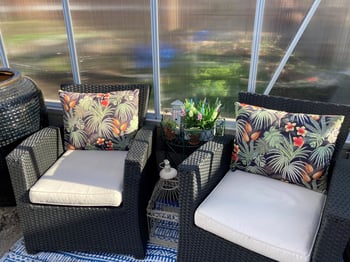
"Plicker" chairs and tables are available at every big box store in the spring. These plastic-woven, wicker-like furnishings are a lot less expensive than true wicker, last for years, and are great in the greenhouse. Because my real wicker chair is black, and I have an antique wicker rocker spray-painted white, I bought black "plicker" armchairs with white cushions to complement what I already own. I also have a white antique wooden bench, perfect for two people.
In other words, I suddenly have too many furnishings for one small space, but I want options so I can move things around as I sit, visit, or entertain seasonally in my greenhouse.
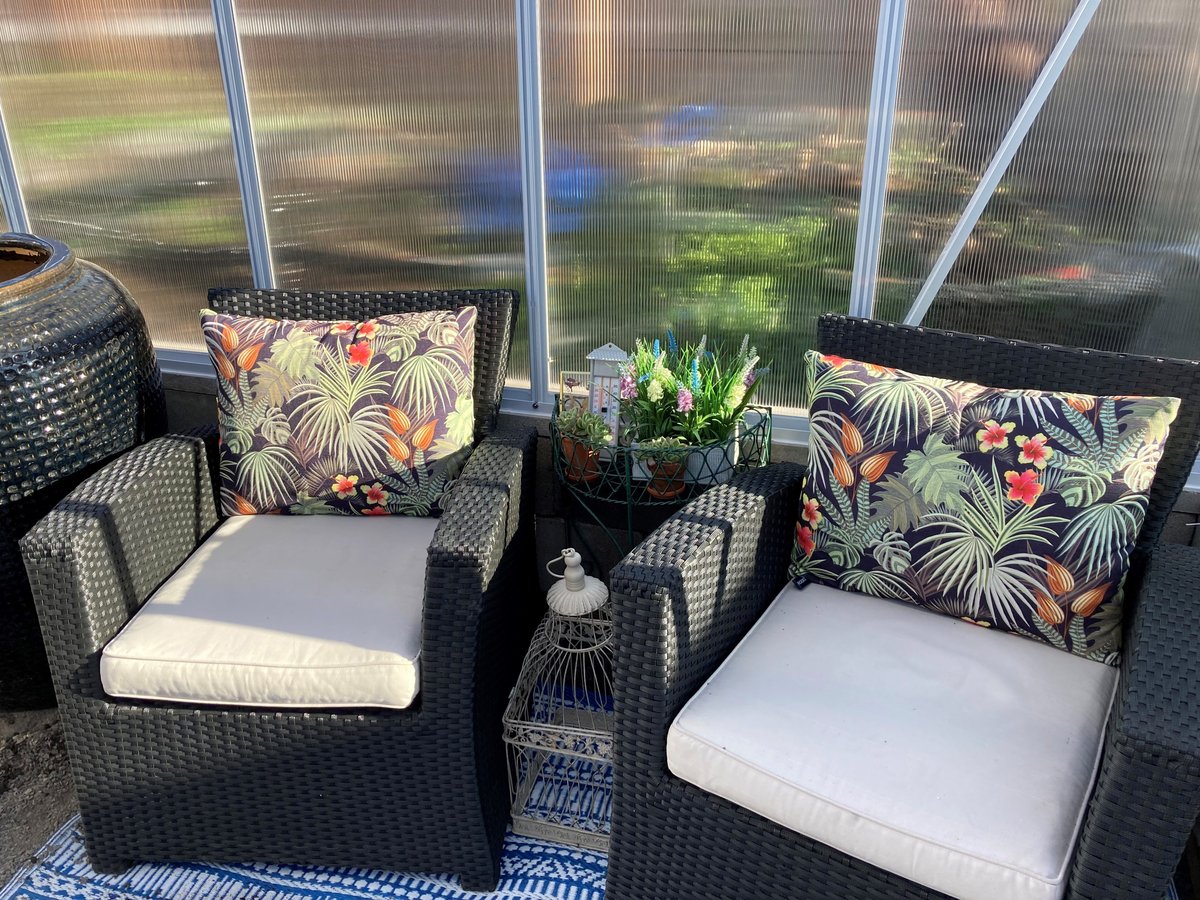
My "plicker" chairs and plastic rug with new toss cushions.
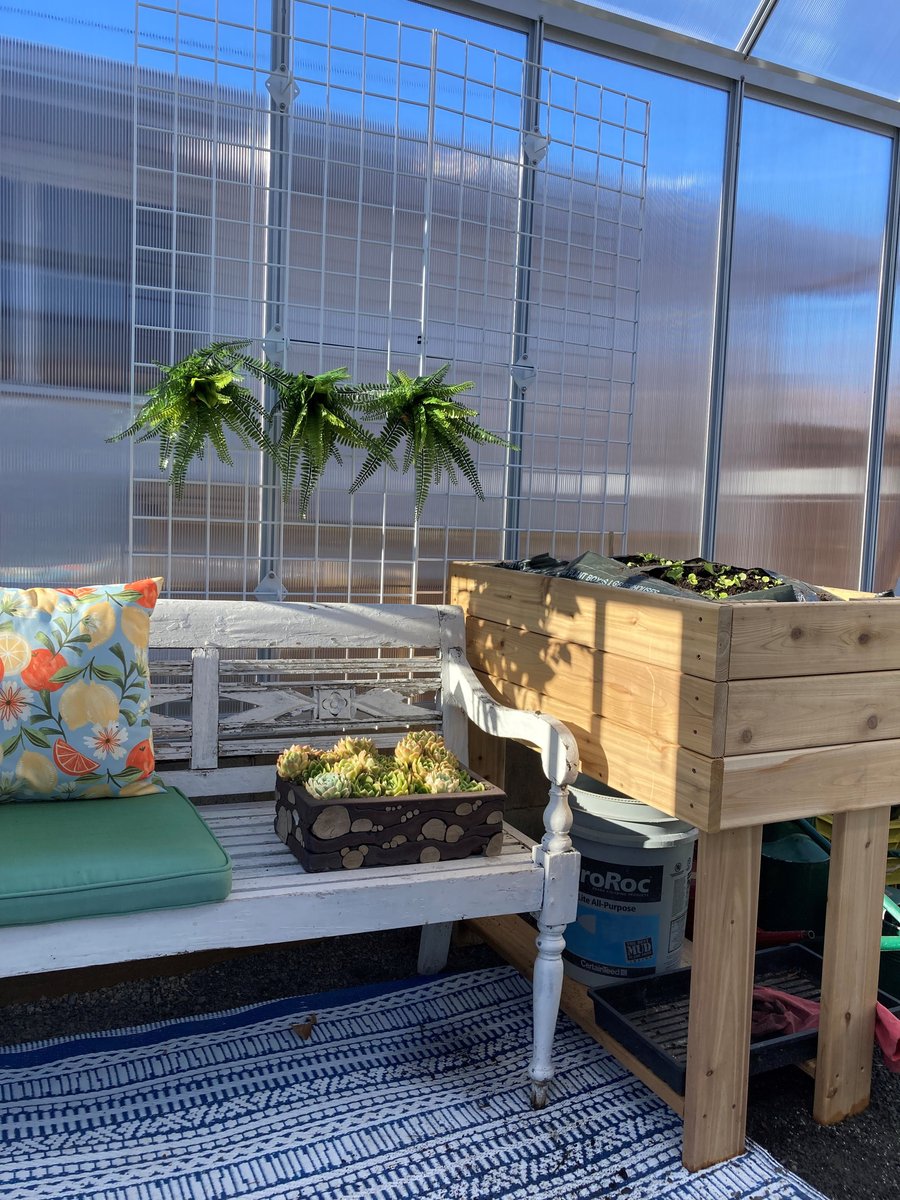
My antique bench, Maxikap planter with emerging lettuce, and gridwall system attached to the sidewall.
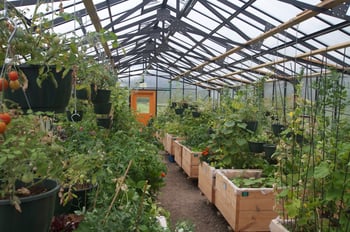
My older and much larger greenhouse was 16 by 20 feet, but I only had room for a single chair because I was growing so much food, as well as seedlings for sale. My new smaller greenhouse is only 10 by 12 feet, but it is mainly for sitting around with friends or reading alone in comfort, with a seasonal potting bench (a slab of plywood on temporary saw-horse legs) and seasonal growing using trays of seedlings hanging from my gridwall panels. All my other plants will grow in specialized pots.
Which Specialized Pots Simplify Greenhouse Plant Care?
The pots that simplify greenhouse plant care the most are self-watering containers, also called sub-irrigated planters or SIP pots, because they hold a water reservoir that keeps plants hydrated for days at a time. BC Greenhouse Builders customers commonly use brands like Caja, Lechuza, and Maxikap, and BC Greenhouse Builders also offers SIP Planter Beds from LifeSpace Gardens designed to fit inside their greenhouses.
Traditionally, my preferred planters are built of concrete or brick and filled with soil. I water and fertilize as needed and am on call for my plants all summer long.
But this time I am simplifying everything. My new greenhouse is all about relaxing, growing seedlings in spring, and raising plants to maturity in self-watering pots, so I can go away for a day or a week during the peak summer months.
In the past, I have used commercial pots and built my own pot-in-pot systems, also called global buckets. These global buckets are simple to build using materials readily available worldwide. You can make one yourself using the basic pot-in-pot reservoir method.
In my new greenhouse, I am getting rid of everything that looks homemade. I am using specialized pots with water reservoirs, also called sub-irrigated planters or SIP pots. And yes, like global buckets, these can be built on site, but I am sticking to commercially available pots this time because I want continuity of design.
SIP Pot Options for a Personal Greenhouse
| SIP System | Type | Best Use |
|---|---|---|
| Caja | Self-watering decorative pot | Specialty plants like saffron crocus, design-focused displays |
| Lechuza | Self-watering modern planter | Long-term mature plants, indoor and greenhouse use |
| Maxikap | Sub-irrigated planter | Lettuce, greens, and seasonal crops |
| LifeSpace Gardens SIP Planter Beds | Self-watering raised bed designed for greenhouses | Larger production within a BC Greenhouse Builders structure |
For more information on the LifeSpace SIP Planter Beds available through BC Greenhouse Builders, you can learn more about LifeSpace Self-Watering Gardens.
How Should You Light a Greenhouse for Year-Round Use?
The best greenhouse lighting for a personal-use space is ambient rather than industrial; candlelight, small twinkle lights, or rope lighting create an evening atmosphere without the harshness of overhead fluorescent tubes. Save the bright work lights for a garage or workshop.
As I strolled out to my greenhouse to check on the electricians, I discovered they were about to install fluorescent lights from the roof. No, not this time. Helpful Husband missed the memo. I have no need to check on plants in the dark of winter in this cold mid-continent location. Instead, I plan candlelight, small twinkle lights, or rope lighting to give ambience in winter.
So I asked the electricians to install the double-bulb fluorescent lights in my husband's work area in the garage instead of the greenhouse. Surely Helpful Husband has a project he wants to work on there, and the light in the garage is always dimmer than in my full-sun greenhouse.
How Can You Personalize Your Greenhouse to Match Your Gardening Style?
The right way to personalize a greenhouse is to let form follow function: design the space around how you actually want to use it, not how a magazine says it should look. A BC Greenhouse Builders greenhouse used mainly for production will look very different from one used mainly for sitting, reading, and entertaining, and both are correct.
There is no one right way to decorate the inside of your greenhouse. But form follows function, as architects commonly say, so if you are looking for maximum plant production on wire shelves and in permanent planters and pots, your space will look different from mine.
This time, my function is all about pretty and seasonal. I will grow mostly during the summer and the shoulder seasons, and I will use the greenhouse as my winter escape from wind and chill, only when the sun shines. I will enjoy my comfy furniture on that sunny February morning when the temperature spikes. You will find me drinking coffee and reading seed catalogues in anticipation of getting my hands dirty.
This greenhouse is my dream house, a pretty place to sit and smell the soil. This week I am smelling the saffron as it blooms in my Caja pot. Heavenly. So start planning and find just the right decor and plants for your new shiny space. I will meet you there in my daydreams.
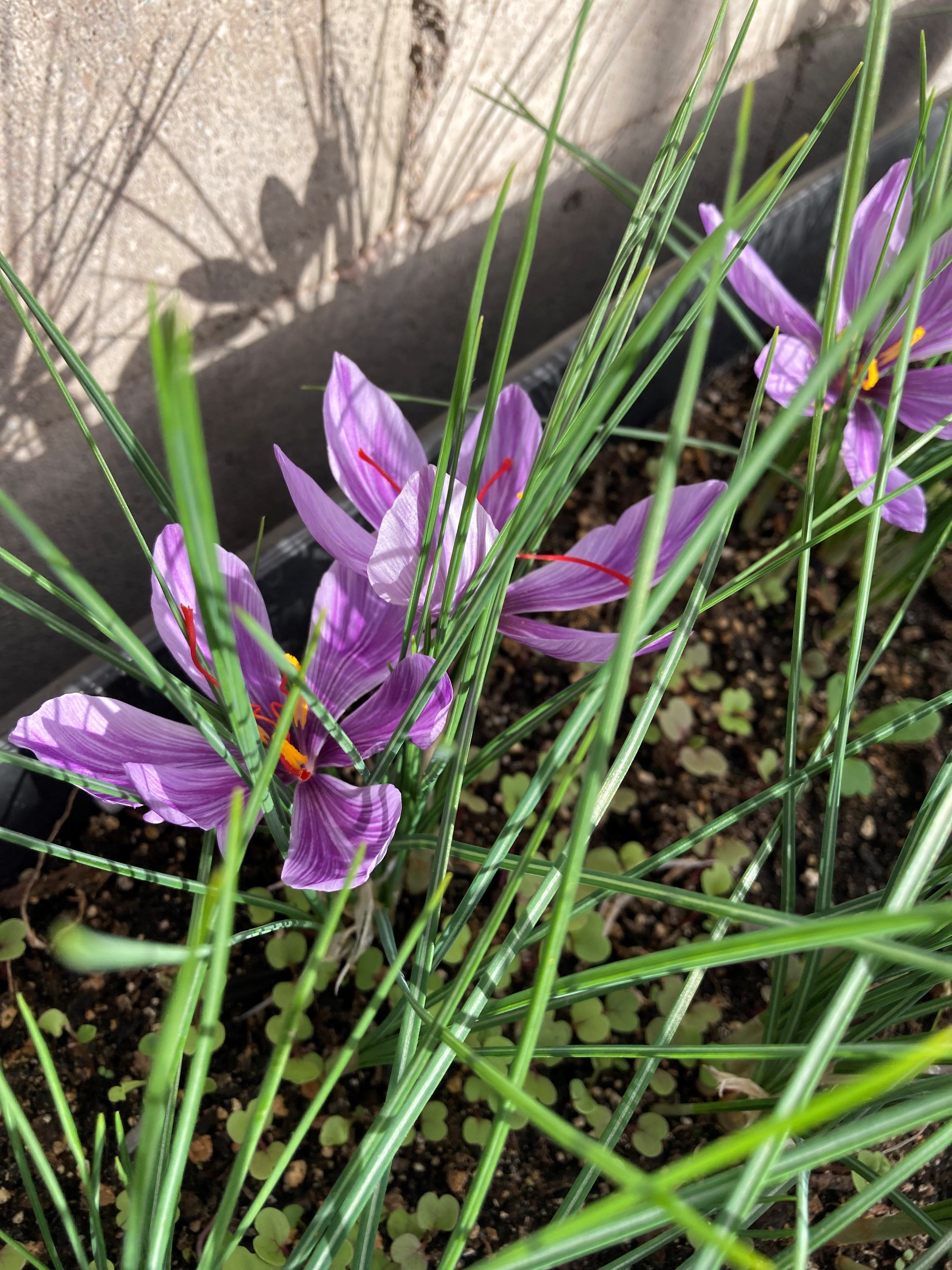
My saffron crocus burst into bloom in my Caja SIP pot and fill the greenhouse with scent. Smaller arugula seedlings are emerging beneath the crocus for a late fall snack.
Ready to Plan Your Own Greenhouse Oasis?
If you are ready to start designing your own greenhouse space, here is a prioritized checklist drawn from how I set up mine, with help from BC Greenhouse Builders:
- Decide on the primary purpose of the space, production, beauty, or both, before choosing any decor.
- Pick flooring that matches that purpose: crushed gravel, Swisstrax, or a layered approach with a polyethylene rug for sitting areas.
- Use the BC Greenhouse Builders track system and gridwall panels for flexible, year-round wall organization.
- Add at least one comfortable, moisture-tolerant chair or bench so the greenhouse becomes a place to relax, not only to work.
- Standardize on one or two SIP pot brands, such as Caja, Lechuza, Maxikap, or LifeSpace SIP Planter Beds, for design continuity and easier summer plant care.
- Plan ambient lighting (candles, twinkle lights, rope lights) for evening atmosphere, and keep the bright work lighting in the garage.
For more greenhouse planning tips, order the free BC Greenhouse Builders catalog, browse the LifeSpace Self-Watering Gardens options, or get in touch with the BC Greenhouse Builders team to talk through your own dream space.