Quick Answer
The best greenhouse for a small yard or urban garden is one that fits your space, gets good winter light, and supports a practical layout for everyday use. At BC Greenhouse Builders, we recommend starting with measurements and a quick winter sun check, then choosing a size that keeps the yard usable. To extend the growing season, select glazing that matches your goal, such as twinwall polycarbonate for spring and fall, or more insulating fivewall polycarbonate or Low-E double pane glass for colder weather.
- What makes urban greenhouse gardening different?
- How do you measure your yard for a greenhouse?
- What greenhouse size works best for a small yard?
- When is a cold frame a better option than a greenhouse?
- Is a freestanding or attached greenhouse better for an urban setup?
- How do you choose the best greenhouse placement when city shade is a factor?
- What layouts make a small greenhouse feel bigger?
- How do you plan for a longer growing season in a small yard greenhouse?
- A simple decision path for urban gardeners looking for a greenhouse
Even in the city, you can grow more than you think. A small yard, courtyard, or side space can still support a serious garden when you have a protected place to start seeds, keep crops going longer, and shelter plants when the weather turns.
The trick is choosing a setup that fits how you actually live and garden. In urban space, the best choice is usually the one that makes daily use easier, not the one that takes up the most square footage.
In this guide, we will walk through how to plan for space, light, access, and layout so you can choose a setup that fits your yard and your gardening goals.
What makes urban greenhouse gardening different?
Urban gardening is a little like solving a puzzle. You can absolutely grow a lot in a small yard, but you will usually be working around a few extra constraints.
- Tighter footprints, such as townhouse yards, narrow side yards, and small courtyards
- More shade from buildings, fences, and mature trees
- Closer neighbors and tigher sightlines
- Limited access for delivery and installation
The good news is that these challenges are predictable. If you plan around space, light, and access first, the right greenhouse setup can feel like it was made for your yard.
How do you measure your yard for a greenhouse?
Before you start shopping, take a few quick measurements. This step saves a lot of back-and-forth later and helps you choose a model that fits your space and your goals.
Measure these four things
- Usable footprint: the flat area you can actually build on (length and width)
- Height limits: fences, trees, eaves, and overhangs
- Access path: gates, stairs, corners, and anything that makes it hard to move materials
- Water and power: where it is easiest to run a hose line and bring in electricity
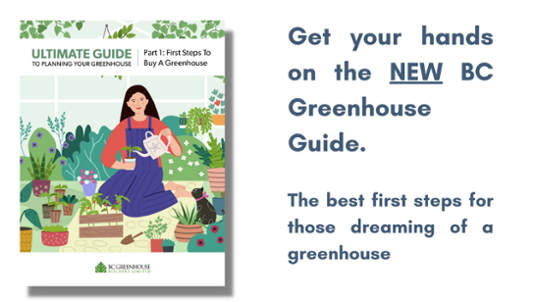
You can find more tips in our "First Steps to Buy A Greenhouse" Guide.
A small yard tip that makes a big difference
In tight spaces, a smaller greenhouse can outperform a bigger one if the layout is smart. A compact footprint paired with good wall height and efficient benching can give you a surprising amount of growing space without making the yard feel crowded.
What greenhouse size works best for a small yard?
Most urban yards do best with a greenhouse that feels intentional. Not oversized. You want enough room to move, work, and store essentials without losing your whole outdoor area.
Common small yard sizes and what they are best for
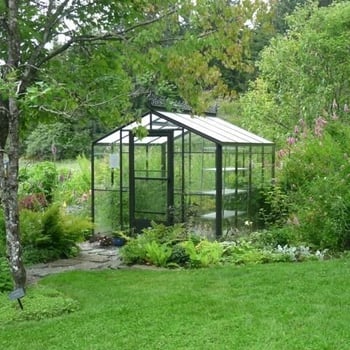
8x8 to 8x10
Great for seed starting, herbs, and container growing when you want a true greenhouse feel without taking over your yard. The Legacy Greenhouse by BC Greenhouse Builders is a great glass sidewall option for those looking to get this size.

8x12
A compact footprint that still gives you a real greenhouse workspace for spring starts and fall extension. The Westgrove by BC Greenhouse Builders is a great value model option in this 8x12 that still offers excellent wind and snow loads.
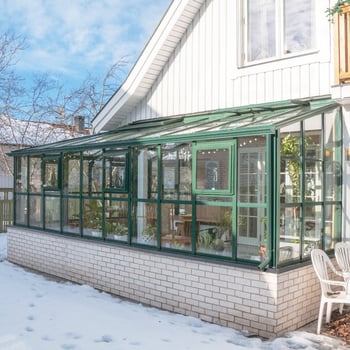
Long and narrow footprints
Ideal for side yards and "garden corridor" layouts, especially when you want to keep the rest of the yard open for everyday use or to make the greenhouse an extension of your home.
When is a cold frame a better option than a greenhouse?
If you are working with a patio, a very small courtyard, or you are not ready to commit to a full greenhouse, a cold frame can be a smart first step.
A cold frame can be a great fit when:
- You want a simple way to extend the season for greens and early crops
- You want a protected spot to harden off seedlings in spring
- Your space or budget is better suited to a smaller structure
If you still want something that will last the long term, Charley's Greenhouse and Garden Supplies offers a stunning cedar cold frame to help you start earlier, grow longer, and protect young plants without taking over your yard.
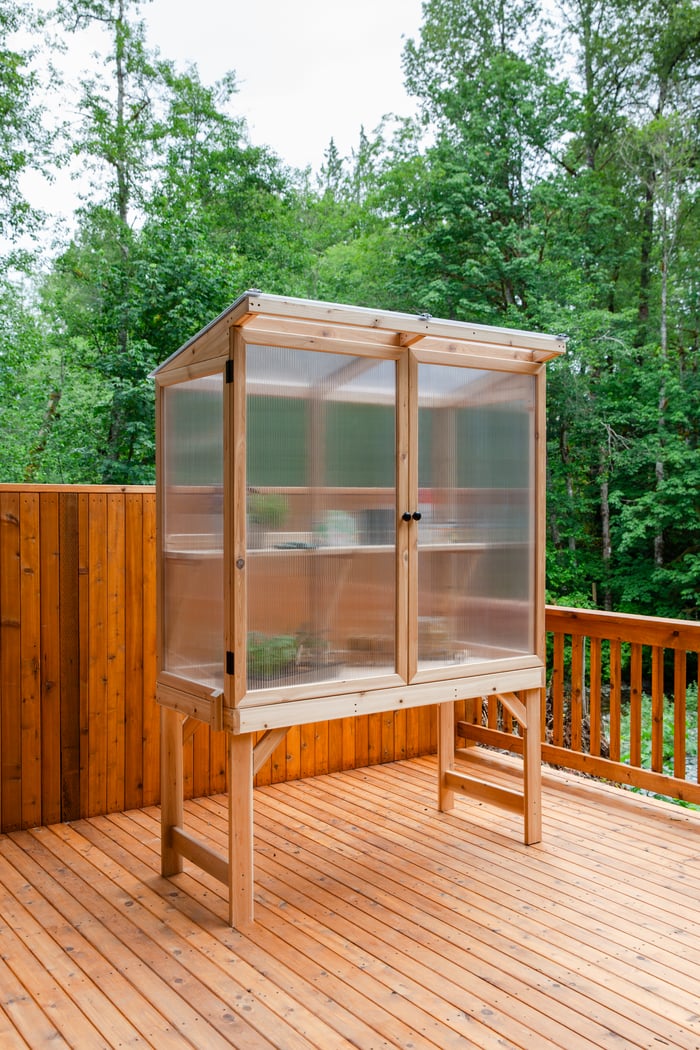
Victory Upright Cold Frame
$999.00Not ready for a full greenhouse just yet? The Victory Upright Cold Frame Bench is the perfect in-between. It’s built for gardeners who want to get a jump on the season, keep plants cozy through the colder months, or simply grow more, even with limited outdoor space.
Is a freestanding or attached greenhouse better for an urban setup?
Both a freestanding or attached greenhouse can work well. The best choice depends on where the light is, how you use your yard, and how much convenience matters to you.
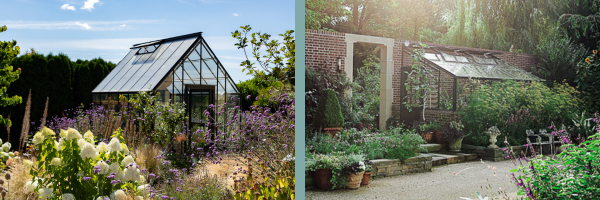
Freestanding is often best when:
- You want flexibility to place the greenhouse where it gets the best sun
- You want airflow on all sides for easier temperature control
- You need to work around windows, doors, utilities, or existing landscaping
For a smaller-sized freestanding greenhouse, we recommend The Sunhaven by BC Greenhouse Builders as a great entry point that can also be expanded later.
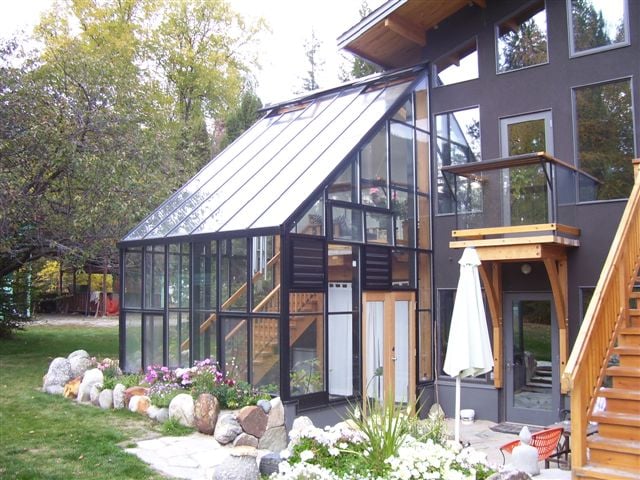
Attached can be a great choice when:
- You want quick access for watering, harvesting, and daily use
- You want to use existing water and power hookups on the outside of your home
- You like the idea of the greenhouse feeling like an extension of the home
BC Greenhouse Builders offers both a Lean-to and Gable Attached value model 8x10 option that could be a great, small-footprint option for urban gardeners.
How do you choose the best greenhouse placement when city shade is a factor?
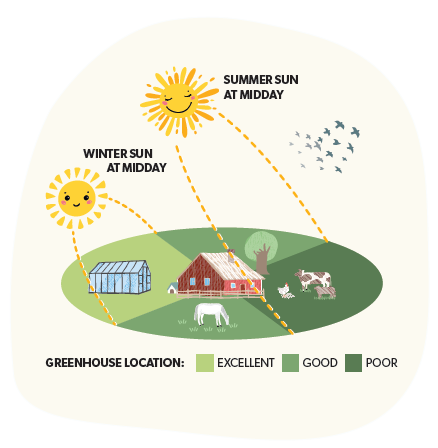
Light is everything especially in winter. In urban settings, the challenge is not just "how much sun", it is when you get it.
What to watch for:
- Winter sun matters most if you want a longer season or year-round growing
- Shade changes across the day, so check the light in the morning, midday, and later afternoon
- Buildings and fences can create long shadows even if the yard looks bright in summer
A practical way to test light for greenhouse placement
Pick your intended greenhouse spot and note the sun for a few days. Even a simple phone photo taken at the same time every day can reveal patterns quickly.
What layouts make a small greenhouse feel bigger?
Layout is where small greenhouses really win. The goal is to keep your walkway usable and your workspace comfortable.
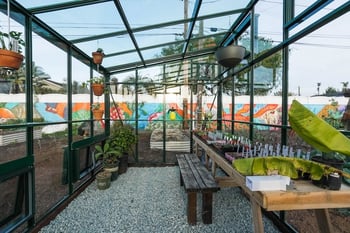
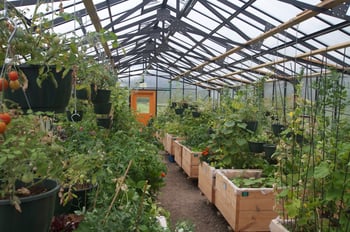
Single Center Aisle
Great for narrow widths because it keeps your walkway clear and gives you one main rowing zone that is easy to reach.
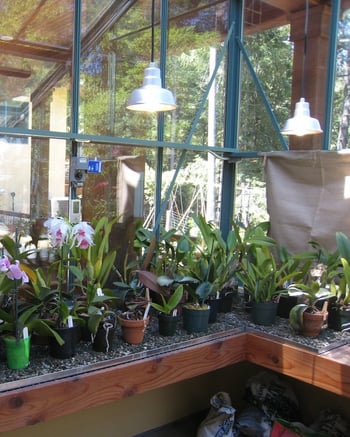
L-shaped Bench
Great for mixing pots with taller plants since you can keep a corner for trays and tools, while leaving open floor space for larger containers and vertical growers.
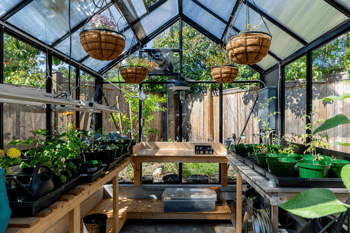
U-shaped Bench
Great for seed starting and potting because it creates a dedicated work spot for trays, soil, and tools, plus plenty of bench space for stanging seedlings as they size up.
Small-space features that matter
- Ventilation: airflow planning matters more in compact spaces
- Storage: keep it vertical so you do not lose floor space
- Walkway surface: stable footing makes the greenhouse easier to use year-round
How do you plan for a longer growing season in a small yard greenhouse?
If you want more than a spring jumpstart, think in seasons, not just square footage. Glazing plays a big role here because it affects light levels, heat retention, and how stable the temperatures feel inside.
For shoulder season growing
- Focus on light, airflow, and simple temperature control
- Keep your layout flexible for trays in spring and larger pots in fall
- Glazing option to consider: Twinwall polycarbonate for more insulation while still staying bright.
For winter and year-round greenhouse growing potential
- Plan for insulation strategy and temperature stability
- Make ventilation and airflow part of the plan from the start
- Glazing options to consider: Extra insulating fivewall polycarbonate for amore affordable, highly insulating option. For a clear glass look, try Low-E Double Pane glass.
.jpg?width=1024&name=Sunhaven%208x8%20Twinwall%20Low%20Res(3).jpg "Sunhaven 8x8 Twinwall Low Res(3)")
A simple decision path for urban gardeners looking for a greenhouse
If you are stuck choosing between options, start with your main goal.
- Mostly seed starting: prioritize bench space and access
- More food growing across seasons: prioritize winter light and ventilation planning
- A greenhouse you use often: prioritize convenience and a comfortable work zone
- Very tight space: consider starting small and scaling up later
A small yard does not limit what you can grow. With the right footprint, a smart layout, and a plan for light and airflow, urban greenhouse gardening can be one of the most rewarding ways to extend your season.
If you want help narrowing down the best fit for your space, start by measuring your footprint and tracking winter light. From there, choosing the right structure becomes much easier.